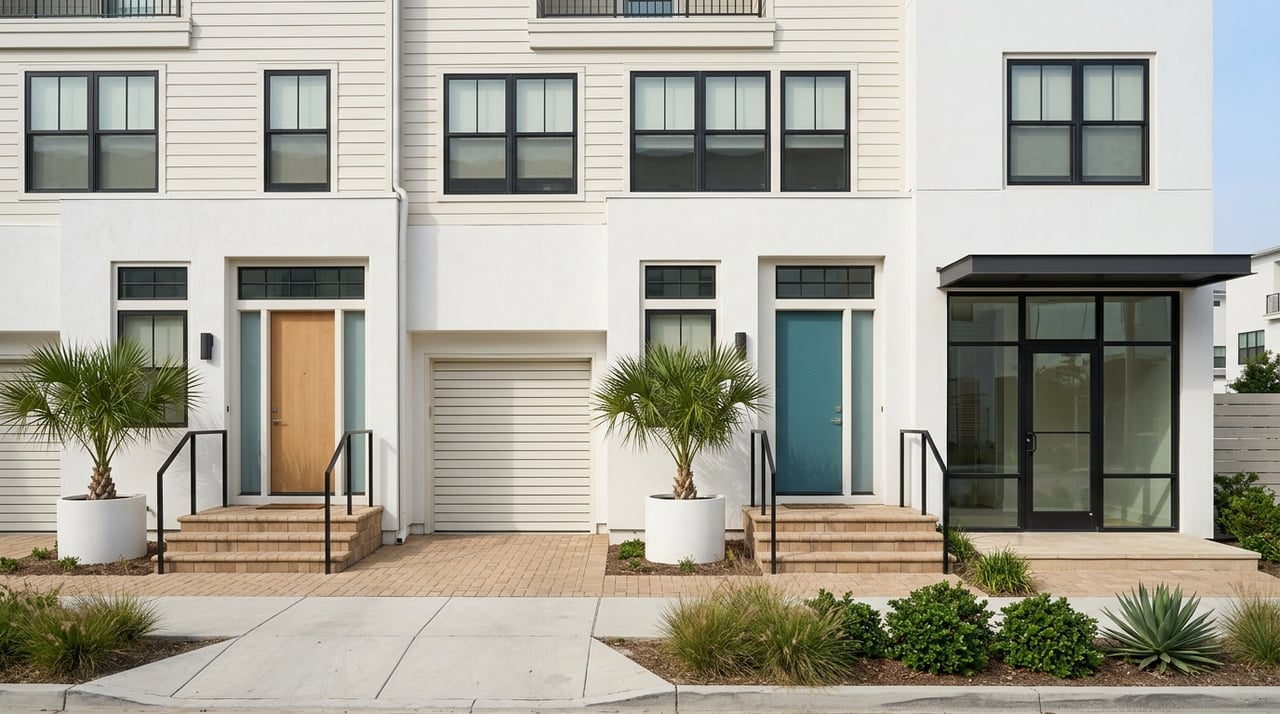
Trying to choose between a condo and a townhome in Downtown Pensacola? It sounds simple at first, but the right fit often depends on more than square footage or style. If you want walkability, manageable upkeep, and a home that fits your day-to-day life downtown, understanding the real differences can save you time, money, and stress. Let’s dive in.
Why Downtown Pensacola changes the choice
Downtown Pensacola offers a lifestyle that can shape your housing decision in a big way. You are close to Palafox Street, waterfront parks, museums, Palafox Market, Gallery Night, and seasonal transit options like the ferry and free trolley. If you want to live in a place where you can do more without getting in the car, downtown delivers that opportunity.
That same convenience also comes with details you need to weigh before buying. Parking is actively managed in the downtown core, with timed spaces, resident-only decal parking in some areas, and city enforcement that can affect your daily routine and guest parking. In some parts of downtown and nearby historic areas, exterior changes may also require review and approval.
Condo vs townhome in Florida
Before you fall in love with a listing label, it helps to know how Florida treats these property types. A condominium is a legal form of ownership created under Chapter 718, where you own your unit and also share ownership in the common elements. A townhouse, under Florida law, is a single-family dwelling unit of no more than three stories that is attached to other units with property lines separating them.
The key point is that the marketing description does not always tell you the legal structure. In Downtown Pensacola, an attached home that looks like a townhome may actually be part of a condominium association. That is why you should always review the deed, declaration, and association documents instead of relying on the listing headline alone.
What condo living often looks like downtown
Downtown condos often appeal to buyers who want a more centralized, lower-maintenance setup. In practical terms, that may mean living in a historic or mixed-use building close to restaurants, events, shops, and the waterfront. This style of ownership can be a strong fit if you value walkability and building-managed living.
Examples in the downtown area help show that pattern. The Brent Lofts are located in a historic building with contemporary units and direct access to Palafox Street. Carlton Palms also highlights proximity to downtown amenities like parks, museums, shopping, theaters, the marina, and the farmers market.
For many buyers, that kind of setup means less focus on exterior upkeep and more focus on enjoying the location. If you want to lock the door and spend more time out enjoying downtown, a condo may feel like the easier fit.
What townhome living often looks like downtown
Townhome-style properties in and around Downtown Pensacola often offer a more house-like feel. You may find private entries, a bit more separation from neighbors, and outdoor elements such as courtyards or shared greens. That can be appealing if you want downtown access without moving into a more traditional condo building.
Local examples show this clearly. Covington Place in the North Hill Preservation District includes features like a gated entry, interior courtyard, gathering green, and gazebo. These kinds of properties often attract buyers looking for more space and a layout that feels closer to single-family living.
That said, you still need to confirm the legal ownership structure. Port Royal is a good reminder that a property can be marketed one way while the recorded declaration says something else. Some units have been described as townhomes in listings, while the association identifies the community as a condominium association.
Costs and upkeep are not the same
One of the biggest differences between condos and townhomes is how maintenance and shared costs are handled. With a condo, Florida law places responsibility for maintaining common elements on the association, unless the declaration says certain limited common elements are owner-maintained. That can reduce your personal upkeep burden, but it also means you need to understand exactly what the association covers.
In a condo, the association is also required to use best efforts to maintain adequate property insurance. Still, that policy does not cover everything inside your unit. Certain interior items and personal property are generally your responsibility, which is why reviewing both the association policy and your own coverage needs is so important.
Townhome communities can work differently. In communities governed by Chapter 720, reserve funding is more flexible, and the actual ownership cost depends heavily on what the HOA is budgeting for. Roofs, exterior paint, roads, gates, and landscaping may or may not be funded the same way from one community to another.
Why reserves matter more now
If you are considering a downtown condo, reserves deserve close attention. Florida’s condo reserve rules now require budgets to include reserve accounts for capital expenditures and deferred maintenance. Buildings that are three habitable stories or higher must also complete a structural integrity reserve study at least every 10 years.
That matters because reserve funding can directly affect your monthly costs and future assessments. In older or larger downtown buildings, this is not just a technical detail. It is a core part of understanding the true cost of ownership.
For townhome communities with HOAs, the reserve picture may be less rigid. An HOA can include reserves for major items, but if reserves are not established, funding is limited by the governing documents. Once reserves exist, members can vote to waive or reduce them for a year, which means you need to look beyond the monthly dues and ask how major repairs are actually being planned for.
Flood zones and historic rules can affect ownership
Downtown location brings some extra layers that buyers should not ignore. On waterfront or low-lying properties, flood exposure and flood insurance can change the total cost of owning the home. Pensacola’s Flood Insurance Rate Map was updated on August 19, 2025, and some properties shifted into new Special Flood Hazard Areas.
Historic preservation is another factor in parts of downtown and nearby neighborhoods. If a property falls within an area subject to historic review, certain exterior alterations, additions, and site work may require approval from the Architectural Review Board. That may not affect your day one move, but it can matter later if you plan to make exterior changes.
What inventory suggests right now
Current downtown inventory offers an interesting clue about buyer choice. A recent market snapshot showed 23 condos for sale in Downtown Pensacola, with a median listing price of $689,000. In the same snapshot, there were 9 townhouses for sale, with a median listing price of $1.15 million.
This is a small sample, so it should not be treated as a final rule. Still, it suggests that condo inventory is broader, while townhome options may skew toward larger or higher-end attached homes. If you are shopping with flexibility on style, that difference in available inventory may shape what you see first and what fits your budget.
Which option may fit you better
The better choice often comes down to how you want to live day to day. A condo is often a strong fit if you want lighter maintenance, strong walkability, and a more centralized building-style setup. A townhome may suit you better if you want more interior space, a private entry, and a home that feels more like a traditional house while still staying close to downtown.
Here is a simple way to think about it:
Condo may fit if you want
- Lower day-to-day exterior maintenance
- Easy access to downtown events and amenities
- Building-style living with shared common areas
- More inventory options in the current downtown market
Townhome may fit if you want
- More room and a more house-like layout
- A private entrance
- Outdoor space such as a courtyard or patio area
- A downtown location with a little more separation
Questions to ask before you make an offer
No matter which type you prefer, document review is essential. The monthly fee alone will not tell you enough. You need to know what is covered, what is excluded, and how the community plans for future expenses.
Before you move forward, ask these questions:
- Who maintains the roof, exterior paint, windows, balconies, hurricane protection, and limited common areas?
- Are reserves fully funded, or can they be waived or reduced?
- How does owner and guest parking work?
- Is parking deeded, assigned, or affected by downtown street rules?
- Is the property in a flood zone?
- Is the property located in a historic district where exterior changes may need approval?
- Is the home legally organized as a condo or under an HOA?
The smartest way to decide
In Downtown Pensacola, the condo versus townhome decision is really about lifestyle, legal structure, and long-term costs. Two homes can look similar in photos but come with very different maintenance obligations, insurance needs, parking realities, and reserve requirements. That is why careful review matters just as much as curb appeal.
If you want help comparing downtown options, reviewing the details behind the listing, and narrowing in on the right fit for your goals, Kathryn Paro can help you move forward with clear, local guidance.
FAQs
What is the legal difference between a condo and a townhome in Florida?
- A condo is a form of ownership where you own your unit and share ownership of common elements, while a townhouse is a single-family attached dwelling with property lines separating units under Florida law.
Why does parking matter when buying in Downtown Pensacola?
- Downtown parking is actively managed with timed spaces, resident-only decal areas in some locations, and enforcement rules that can affect your daily use and guest parking.
What should you review before buying a Downtown Pensacola condo?
- You should review the deed, declaration, association documents, maintenance responsibilities, reserve funding, insurance coverage, parking rules, and whether the property is in a flood zone or historic review area.
Are Downtown Pensacola townhomes always governed by an HOA?
- Not always, which is why you should verify the recorded legal structure because some attached homes marketed as townhomes may actually be part of a condominium association.
How can flood zones affect a Downtown Pensacola home purchase?
- Flood zone status can affect insurance costs and overall affordability, especially for waterfront or low-lying properties, and the city notes that some properties shifted into new Special Flood Hazard Areas after the 2025 map update.
Is a condo or townhome usually more expensive in Downtown Pensacola?
- A recent downtown market snapshot showed condos with a median listing price of $689,000 and townhouses at $1.15 million, suggesting townhome listings currently skew higher, though inventory remains limited.
