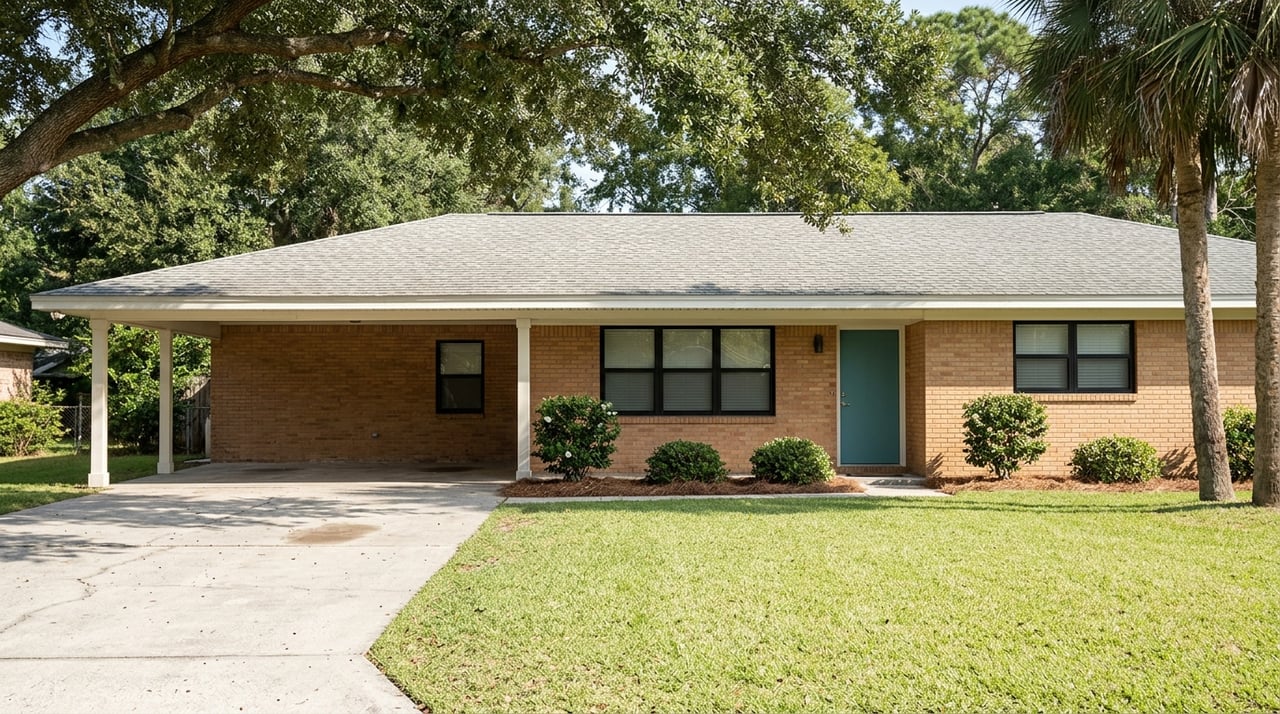
If you are searching for a home in Scenic Heights, one of the first things you will notice is that home age and style vary more than you might expect. This is not a neighborhood made up of one look or one era. Instead, you will find a strong mix of mid-century and late-postwar homes, along with some attached housing and a smaller number of newer properties. Understanding that mix can help you read listings more clearly, spot opportunity, and make a smarter buying decision. Let’s dive in.
Scenic Heights Has a Strong Mid-Century Core
Scenic Heights is best described as a Pensacola-area neighborhood with a housing stock centered on the 1960s through the 1980s. According to Point2Homes neighborhood demographics, the median year built is 1979, with 18.9% of homes built in the 1960s, 29.6% in the 1970s, and 25% in the 1980s.
That matters because it shapes what you are likely to see on the market. Most homes in Scenic Heights are not brand-new builds, but they also are not especially old by Pensacola standards. The neighborhood is largely made up of postwar and late-postwar housing, which gives buyers a useful middle ground between older character homes and newer subdivision-style construction.
There are earlier homes in the area, but they are a smaller share of the housing stock. Point2Homes reports that just 0.2% of homes were built in the 1940s and 4.8% in the 1950s, while about 11% were built from 2000 onward.
Detached Homes Lead the Mix
If you picture Scenic Heights as mostly detached homes, that is generally accurate. Point2Homes data shows that 63.6% of the housing stock is detached single-family homes.
That said, attached housing is also part of the neighborhood. Townhomes, duplexes, condos, and other smaller multifamily options appear here too, which gives buyers a broader range of layouts, maintenance needs, and price points than you might expect from a neighborhood with such a strong single-family identity.
This variety can be helpful if you are comparing priorities. You may find that a detached ranch offers more yard space, while a townhome may offer a different floor plan or fewer concerns tied to older exterior systems.
Common Scenic Heights Home Styles
A large share of Scenic Heights lines up with the classic postwar ranch pattern. The University of Florida’s postwar housing survey describes ranch homes as low-profile, often one-story houses with open floor plans, large picture windows, and a focus on natural light and indoor-outdoor connection.
That description fits many of the home features seen in Scenic Heights listings. You will often see one-story homes, ranch or traditional architecture, brick or frame exteriors, slab or off-grade foundations, fenced yards, screened porches, carports, converted garages, and detached workshops.
In practical terms, these homes often feel straightforward and functional. Many buyers like that because one-story layouts can be easier to live in day to day, and the simple structure of many ranch homes can make future updates feel more manageable.
Real Listing Examples Show the Range
Recent and current listings reinforce the neighborhood’s age and style spread. Examples cited in the research include a 1962 brick single-family home on Cherry Laurel Drive, a 1971 ranch on Leesway Boulevard, a 1974 home on Plum Road, a 1981 townhome on Kirsten Drive, and a 1997 single-family home on Flintwood Circle.
Those examples show why it helps to avoid broad assumptions. Two homes in the same neighborhood can have very different floor plans, maintenance profiles, and renovation histories even if they appear similar at first glance.
Newer Homes Exist, But They Are Limited
If you are hoping for newer construction in Scenic Heights, you may find some options, but they are a smaller part of the inventory. Point2Homes shows that only about 11% of homes were built from 2000 onward, and the neighborhood profile includes just five homes built in 2020 or later.
That does not mean newer-feeling homes are hard to find. It simply means that many homes with an updated look may actually be older properties that have been renovated over time.
This is an important distinction for buyers. A remodeled 1970s ranch may offer the kitchen, baths, windows, and roof upgrades you want, even if the original build date is decades earlier than a newer subdivision home.
Why Age Alone Does Not Tell the Whole Story
One of the biggest mistakes buyers make is treating the year built as the full story. In Scenic Heights, condition and updates often matter more than age alone.
Recent listing examples commonly highlight upgrades such as new roofs, HVAC systems, metal roofs, impact-rated garage doors, spray foam insulation, updated kitchens, remodeled bathrooms, and replaced windows. As shown in listing information like this Flintwood Circle property example, those improvements can have a major effect on comfort, energy performance, and maintenance planning.
A 1960s or 1970s house that has been thoughtfully updated may feel more turnkey than a younger home with fewer improvements. On the other hand, a house with mostly original systems may require more immediate planning, even if the layout and location are appealing.
What Buyers Should Focus On During Tours
When you walk through a Scenic Heights home, it helps to look past finishes and ask how the home has evolved over time. A listing should be read as a full package that includes year built, renovation history, style, layout, and foundation type.
Several key items deserve close attention:
- Roof age and material
- HVAC age and condition
- Window replacement history
- Insulation updates
- Foundation type
- Electrical condition
- Any garage conversions or carport alterations
- Whether later additions were completed well
These details often matter more than the decade a home was built. A simple ranch with solid updates may offer a smoother ownership experience than a home with more square footage but older systems.
Ranch Layouts Can Offer Flexibility
Older ranch homes are often easier to rework than buyers expect. The UF postwar housing survey notes the simple form and open tendencies of ranch design, which can make these homes feel adaptable over time.
That shows up in Scenic Heights examples. One cited property on Plum Road was a 1974 home with an open-concept kitchen and living area, a detached dwelling unit, a two-car garage, and a new metal roof, showing how an older structure can still support modern preferences.
Townhomes and Condos Are Part of the Neighborhood
Attached housing in Scenic Heights is not unusual. According to Redfin’s Scenic Heights new listings page, the neighborhood has included condos and townhouses for sale alongside detached homes, including a townhome at Spanish Trail Place with 1,981 square feet.
For some buyers, that opens up useful alternatives. A townhome may offer a main-floor primary suite, balconies, or a lower-maintenance setup compared with a detached home on a larger lot.
This is why it helps to define your priorities early. If yard size is less important than layout, system updates, or maintenance simplicity, attached housing may be worth a closer look in Scenic Heights.
Scenic Heights Has a Layered Neighborhood Feel
Because Scenic Heights includes mostly postwar detached homes alongside later-built properties and attached options, the streetscape can feel varied without feeling disconnected. Pensacola preservation guidance describes newer buildings in established neighborhoods as modern infill and recommends that new construction complement neighboring homes, which is a useful way to think about how Scenic Heights has evolved over time. You can review that context in the City of Pensacola preservation guidance.
For buyers, that means the neighborhood is not frozen in one decade. It has a clear core identity, but it also includes enough variety to offer different ownership styles and budgets.
How to Read Scenic Heights Listings Smarter
When a Scenic Heights home hits the market, try to compare it on more than curb appeal and square footage. Two homes built within a few years of each other can live very differently depending on updates, layout, and how the property has been maintained.
A smart way to evaluate listings is to ask:
- Is the layout mostly original or has it been opened up?
- Which major systems have been updated?
- Is the foundation slab or off-grade?
- Has the garage or carport been converted?
- Does the home’s current condition match its asking price and maintenance outlook?
This kind of side-by-side thinking can help you avoid overvaluing a cosmetic renovation or overlooking a well-maintained home with strong long-term potential.
The Bottom Line on Home Styles and Ages
Scenic Heights offers a housing mix that is broad enough to give you options, but consistent enough to feel grounded. Most buyers should expect a neighborhood dominated by detached homes from the 1960s through the 1980s, with ranch-style layouts playing a major role and attached homes adding flexibility.
The biggest takeaway is simple: in Scenic Heights, age matters, but updates matter just as much. If you focus on systems, layout, and renovation quality instead of the build year alone, you will get a much clearer picture of which home really fits your goals.
If you want help comparing Scenic Heights homes, reading listings with a local lens, or narrowing down the best fit for your needs, Kathryn Paro is here to help.
FAQs
What home styles are most common in Scenic Heights?
- Scenic Heights is dominated by detached single-family homes, and many fit the postwar ranch style with one-story layouts, simple footprints, and practical indoor-outdoor living features.
Are most Scenic Heights homes older homes?
- Most Scenic Heights homes were built from the 1960s through the 1980s, with a median construction year of 1979, so buyers should generally expect postwar and late-postwar housing rather than mostly new construction.
Are there newer homes in Scenic Heights?
- Yes, but they are a smaller share of the housing stock, with about 11% of homes built from 2000 onward according to Point2Homes.
Are townhomes and condos available in Scenic Heights?
- Yes, Scenic Heights includes attached housing such as townhomes and condos in addition to detached single-family homes.
What should buyers inspect first in a Scenic Heights home?
- Buyers should pay close attention to roof age, HVAC, windows, insulation, foundation type, electrical condition, and any additions, garage conversions, or carport changes.
Does an older Scenic Heights home always need more work?
- No, several local listing examples show that older homes in Scenic Heights may have substantial updates, so the condition of the systems and finishes is often more important than the year built alone.
