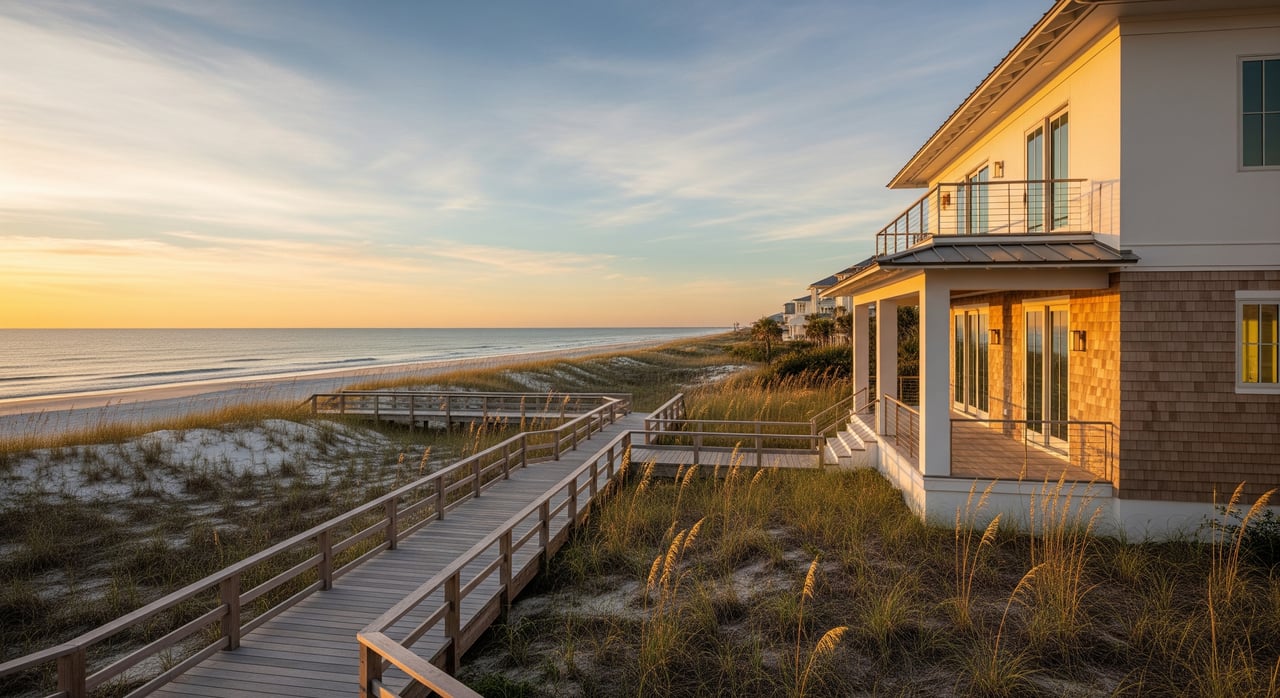
Dreaming of coffee on the balcony with Gulf views and toes-in-the-sand weekends? Pensacola Beach offers that true barrier-island lifestyle many people want, but coastal ownership comes with unique costs, rules, and risks. If you understand the details up front, you can buy with confidence and enjoy the beach more. This guide gives you the essentials on property types, insurance, flood zones, HOAs, rentals, and the due diligence that matters most. Let’s dive in.
Pensacola Beach at a glance
Pensacola Beach sits on Santa Rosa Island in Escambia County. You’ll reach the mainland by bridge and have easy access to Pensacola city services, shopping, and the airport. The nearby Naval Air Station influences local traffic and housing demand.
Parts of the island are within or adjacent to Gulf Islands National Seashore. That means great public access and protected natural areas, along with conservation and use rules. Expect lively spring and summer seasons, plus quieter off-peak months. Daily life feels relaxed, but you will make quick trips to the mainland for certain services and shopping.
What you can buy
Condos dominate the beachfront. Many buildings offer amenities and handle exterior maintenance through an association. Monthly dues can be meaningful, especially in buildings that carry strong master insurance and reserve funds. Always confirm what the dues cover.
Townhomes and duplexes exist in select neighborhoods. They can offer more space or a fee-simple feel, but you still need to understand any shared maintenance obligations and rental rules.
Single-family homes typically sit on the Gulf side or bay side. Newer homes are often elevated on pilings and built to modern coastal codes. Older cottages and low-rise condos remain on the island too. Newer construction that meets current standards can reduce risk and may help with insurance, but it often comes at a higher price point.
True cost of ownership
Coastal ownership is different. Plan for these recurring costs and line items during your purchase.
Property taxes. Taxes are assessed and billed by Escambia County. Millage rates and exemptions vary by area and homeowner status, so confirm details with county offices.
HOA or condo dues. Beachfront buildings often carry larger budgets for exterior insurance, structural upkeep, and amenities. Review how the budget allocates funds for reserves, roofs, balconies, seawalls, and dunes. Ask about recent or upcoming special assessments.
Maintenance. Salt air accelerates wear on metals, paint, HVAC components, and exterior finishes. Budget for more frequent service cycles and materials rated for coastal exposure. Mold and mildew prevention is an ongoing priority.
Utilities and services. Confirm water, sewer or septic, internet options, and trash rules. Island utilities can differ from mainland systems, so verify service providers before you close.
Insurance essentials
Many Pensacola Beach properties sit in mapped flood zones. Lenders follow federal rules on flood coverage, and wind exposure affects premiums and carrier availability. Plan to get quotes early.
Flood zones and FEMA maps. Check the specific parcel on the FEMA Flood Map Service Center. AE and V or VE zones indicate higher flood and storm surge risk. Ask the seller for an Elevation Certificate if available.
Wind and hurricane coverage. Coastal wind risk can limit carrier options and raise premiums. The Florida market has been volatile, and some buyers use private carriers or the state insurer of last resort. Check consumer notices through the Florida Office of Insurance Regulation.
Master policy vs. unit policy. In condos, confirm what the association insures and where your responsibility begins. Interior finishes, contents, loss of rent, and liability may fall on the unit owner. Review the master policy summary and your agent’s recommendations side by side.
Claims history and assessments. Ask for recent claims for both the property and the association. Frequent claims can affect insurability and premiums. After major storms, associations may levy special assessments to cover deductibles or repairs.
Financing and rentals
Lenders may use stricter underwriting for beachfront or high-risk zones. That can mean larger down payments or more documentation.
Flood insurance requirement. If the home is in a mapped high-risk flood zone and you use a federally regulated mortgage, flood insurance will be required by the lender. Get quotes early so your approval reflects real costs.
Rental income assumptions. If you plan to rent, be conservative. Use realistic occupancy and rate expectations and confirm any building or county restrictions. Some associations allow short-term rentals, some limit them, and others restrict them entirely.
Local rules and taxes. Short-term rental permitting, parking standards, and safety requirements are enforced by the county. Tourist or bed taxes apply to short stays. Confirm current ordinances and processes with Escambia County.
Environmental and regulatory risks
Barrier islands bring beauty and exposure. Understanding the terrain helps you buy the right home and protect it well.
Storm surge and flooding. V and VE coastal zones carry higher surge risk along with stricter building and elevation standards. Verify the zone and any elevation certificate before you write an offer. Your inspector should be experienced with coastal properties.
Building codes and mitigation. Florida’s code sets wind-load and impact-resistance standards for coastal areas. Features like elevated foundations, impact-rated doors and windows, and approved shutters can reduce damage and may help with premiums. Learn the basics through the Florida Building Code and confirm past permits with the county.
Beach nourishment and dunes. Renourishment projects, dune rebuilding, and access changes can affect beach width, views, and shoreline conditions over time. Check recent or planned work with the county. Protected dunes and wildlife areas can limit certain improvements or access points.
Access and traffic. Seasonal traffic and bridge access are part of island life. Review evacuation routes and timing, especially during peak spring and summer.
Your due diligence checklist
Use this list with your agent, inspector, lender, and insurance broker to move forward with clarity.
- Pull the property’s FEMA flood zone on the FEMA Flood Map Service Center. Request any Elevation Certificate.
- Review seller disclosures and the history of flood or storm claims for the property and the association.
- Obtain HOA or condo documents: declaration, bylaws, rules, budget, financials, reserve study, insurance summary, board minutes, and any litigation notes.
- Ask the association about recent or planned special assessments and upcoming capital projects.
- Verify permits and code compliance for additions or renovations with Escambia County.
- Schedule a coastal-experienced home inspection plus wind mitigation, roof, HVAC, plumbing, and electrical reviews.
- Confirm utilities and services, including water, sewer or septic, internet, and trash or parking rules.
- If renting, confirm short-term rental eligibility, registration steps, and occupancy tax requirements with the county and the HOA.
- Request flood and wind insurance quotes early and compare coverage options, deductibles, and exclusions.
- Order a title search and survey to confirm boundaries, easements, public access, and any shoreline or dock limitations.
- Map evacuation zones and routes and note seasonal traffic patterns.
How a local advisor helps
Buying on a barrier island is different. The right local partner helps you coordinate inspections, read HOA documents, confirm permits, and line up insurance so there are no surprises at closing. You get neighborhood-level insight on buildings, streets, and maintenance realities that national websites do not capture.
With deep experience across Pensacola, Gulf Breeze, and our barrier islands, Kathryn offers responsive buyer representation, clear communication, and hands-on guidance from search to keys. If you’re considering Pensacola Beach, connect early to align property goals, risk tolerance, and budget with the realities of island ownership. When you are ready, reach out to Kathryn Paro to start your beach home search with confidence.
FAQs
Do I need flood insurance on Pensacola Beach?
- If the property is in a mapped high-risk flood zone and you use a federally regulated mortgage, your lender will require flood insurance; confirm the zone on the FEMA Flood Map Service Center.
How do condo fees and insurance work for beachfront buildings?
- Associations typically insure the building envelope and common areas; you usually insure interiors and contents, so review the master policy, reserves, recent assessments, and what your personal policy must cover.
Are short-term rentals allowed on Pensacola Beach?
- Rules vary by building and neighborhood, and Escambia County enforces permits, safety, parking, and taxes, so confirm current requirements with the county and your HOA before you buy.
What features can lower storm risk and premiums?
- Elevated construction, impact-rated windows and doors, approved shutters, and documented wind mitigation can reduce risk and may help premiums under the Florida Building Code.
How do I check for beach renourishment near a property?
- Ask the seller and HOA about recent projects and contact Escambia County for current or planned renourishment, dune work, and public access updates that could affect the shoreline.
